Imagine gaining a brand-new skill in digital marketing, mental health support or childcare, without paying a penny in tuition fees. That’s exactly what a government-funded course can offer you. Whether you’re a busy parent in Sheffield, a career-changer in Liverpool or in your early thirties in London, this guide from My Free Course will show you how to navigate, apply and succeed in distance-learning courses covered by the Adult Education Fund under the Education and Skills Funding Agency (ESFA).
Table of Contents

What Are Government-Funded Courses?
Government-funded courses are accredited learning programmes where the ESFA covers all, or most of the tuition costs through the Adult Education Budget(AEB). Designed for adult learners aged 19 and above, they span levels 2 to 5 (equivalent to GCSE through foundation degree). Delivered entirely online, they blend interactive modules, video lectures and tutor support, so you can study wherever and whenever suits you best.
Top 5 Benefits of Funded Online Courses.
- Zero Tuition Fees
Access high-quality, accredited learning without paying fees. Ideal if you’re on a tight budget or relying on Universal Credit. - Flexible Structure
Fit your study time around family, work or caring responsibilities. Many learners report completing modules in the evening or weekend “power hours.” - Nationally Recognised Qualifications
Earn certificates and diplomas that employers value. Whether you aim for promotion or a complete career pivot, you can get a certification funded by the government of UK. - Dedicated Tutor Support
Regular one-to-one sessions with a qualified tutor provide personalised feedback, guidance on assignments and progress checks to ensure you stay on track. - Boosted Career Prospects
Positions you competitively in the job market and boosts your career prospects within months of completing your ESFA-funded certification.
Who’s Eligible For The Government-Funded Courses?
To enrol in a My Free Course government-funded online course you must meet the following criteria:
Residency
- Currently live in England.
- Have lived in the UK for the last three years.
Age and Course History
- Be aged 19 or above.
- Have not studied this exact course before.
Funding and Enrolment
- Not be actively enrolled in any other government-funded course.
Technology and Access
- Have regular access to a computer or mobile device with internet connectivity.
In-Depth Look at Popular Funded Program Pathways For Online Courses
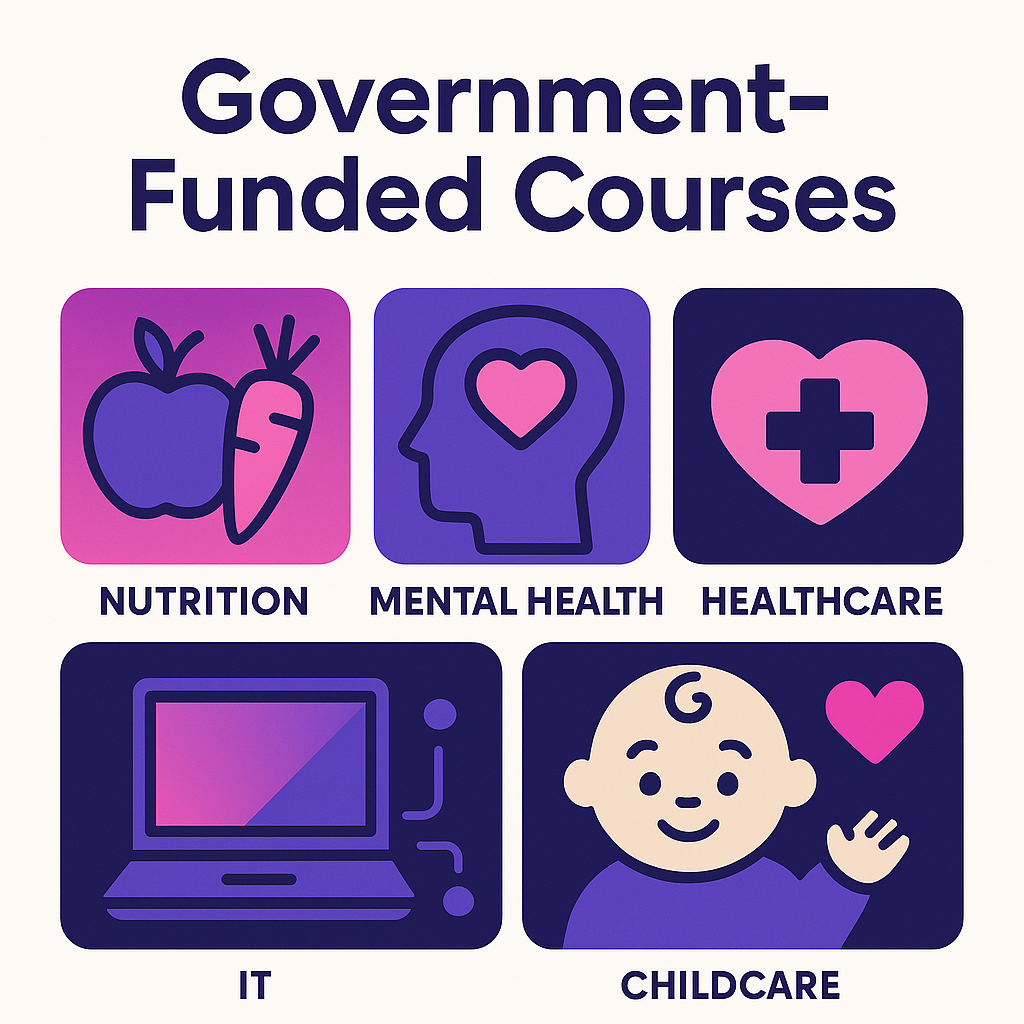
Nutrition and Health
Build a solid foundation in the principles of healthy eating and food hygiene to ensure the safety and well-being of others. You’ll learn how to plan balanced meals, understand dietary requirements and apply best-practice standards in food preparation. These funded online courses empower you to work confidently in hospitality, care settings or community health roles.

Level 2 Certificate in Nutrition and Health
Mental Health Support
Develop the skills to recognise, understand and respond to a range of mental health issues with empathy and professionalism. You’ll explore evidence-based approaches to communication, self-care strategies and support frameworks for individuals in distress. Graduates are equipped to assist in settings such as counselling agencies, schools or workplace well-being programmes.

Level 2 Certificate in Awareness of Mental Health Problems

Level 2 Certificate in Mental Health First Aid and Mental Health Advocacy in the Workplace
Digital and IT
Master essential digital skills from, office software basics to introductory coding and online safety, to thrive in today’s technology-driven workplace. You’ll discover how to navigate common platforms, troubleshoot issues and manage data securely. Ideal for those aiming to boost their CVs or portfolios in business, administration or tech support roles.

Level 2 Certificate in Digital Marketing

Certificate in the Principles of Cybersecurity
How Adult Education Funding Works
Government funding for adult education in England is administered via the Education and Skills Funding Agency’s Adult Education Budget (AEB). Here’s a concise overview of the key steps and what it means for you:
Allocation of Funds
- Each year the ESFA allocates an AEB pot to approved higher education institutions and training providers based on local needs and past delivery.
- Providers agree to deliver specific qualifications, like our Level 2 Certificate Courses, within set funding bands, which determine the maximum government contribution per learner.
Provider Claims and Quality Assurance
- After you enrol and start your course, your provider submits your details via the Individualised Learner Record (ILR) to claim funding in arrears at agreed delivery milestones.
- Regular audits by the ESFA ensure all funding rules are followed and that your learning experience meets national quality standards.
Understanding this process means you can enrol with confidence, knowing exactly which costs are covered, which (if any) you’ll pay, and how the government backs your qualification from start to finish.
Step-by-Step Guide to Applying and Enroling In Our Funded Online Courses
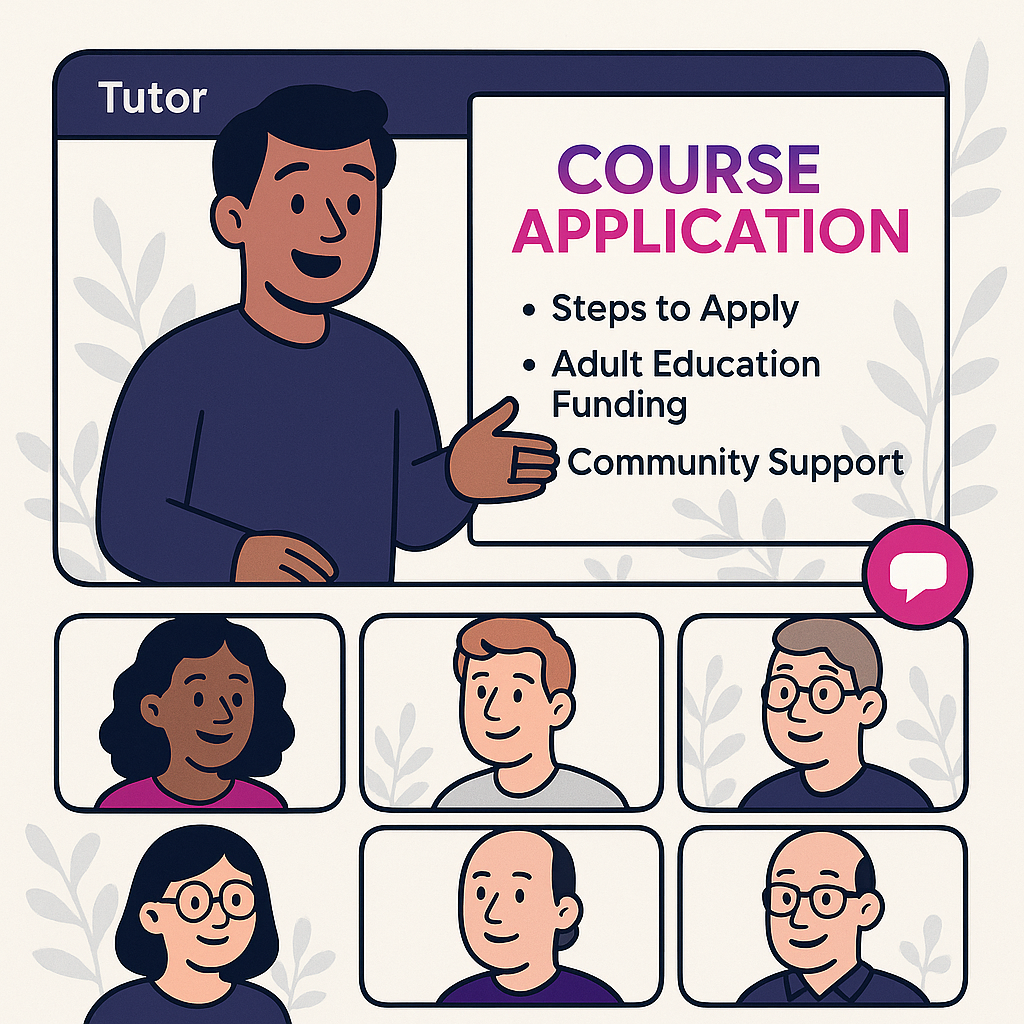
- Explore Courses
Head to our course directory. Select your preferred subject area and read the short course descriptions to find one that fits your goals. - Check Requirements
On the course page, you’ll see who can apply, age, England residency and any necessary qualifications. Some courses also note that you need basic English or maths skills, so be sure to review these before moving on. - Register Your Interest
Click “Enrol Now” and complete the quick online form with your name, email and other necessary details including education history, employment history and residency and insurance information. There’s no obligation to enrol until you get confirmation from us. - Attend an Informal Chat (if needed)
Some courses include a free phone or video call with a tutor. This is a chance to ask questions, confirm entry details and make sure the course meets your needs. - Receive Your Offer
Within a couple of working days after application, we’ll email your official enrolment link, chosen start date, login details and any necessary reading. Check your inbox (and spam folder) so you don’t miss it. - Confirm and Activate
Follow the enrolment link, and set up your student portal password. Once set up and activated, you’ll see your course available appear in your dashboard. - Start Learning
Begin your studies at your own pace, watch video lessons, download worksheets and submit your first assignment. Don’t forget to connect with and introduce yourself in the learner forums to meet peers and tutors!
With these clear steps, you’ll move from browsing to studying in just a few clicks.
Maintaining Your Funding Status for Government-Funded Courses
Once you’ve secured your free course government funded place, it’s vital to keep your funding intact. Follow these key steps to ensure you remain eligible and fully funded throughout your programme.
Stay on Top of Engagement and Attendance
Funding providers must see evidence of your active participation on your online courses.
Log Into the Virtual Learning Environment Regularly
• Aim to sign in at least twice a week to complete modules or check announcements.
• Set calendar reminders for live sessions or submission deadlines.
Record Your Study Hours
• Many colleges require a minimum number of guided-learning hours per month.
• Keep a simple log of when and how long you study. This can be requested by your funding officer.
Meet All Coursework and Assessment Deadlines
Late submissions can jeopardise your funding status.
Review Your Learner Agreement
• Your welcome pack will outline the number of assignments and their due dates.
• Highlight each deadline in your calendar and allow buffer time for unexpected delays.
Communicate Early if You’re Struggling
• If life or work commitments impact your ability to submit on time, email your tutor or funding officer as soon as possible.
• Providers can often agree reasonable extensions without affecting your funded place.
Keep Your Personal Details Up to Date
Changes to your circumstances may affect eligibility.
Notify Your Provider of Any Residency or Benefit Status Changes
• If your right to study changes (e.g. from pre-settled to settled status), send updated evidence.
• Similarly, inform them if you begin or stop claiming Universal Credit or other benefits.
Update Contact Information Promptly
• Ensure your email address and phone number are current so you don’t miss vital funding compliance notices.
Plan Ahead for Further Funding or Next Level Study
When you complete your free level 2 courses , you may wish to progress to the next course on your learning pathway or an entirely new course in a new pathway.
Discuss Progression Options with Your Tutor
• Use your one-to-one clinics to map out a study pathway and any additional funding you’ll need.
By proactively managing your attendance, deadlines and personal details, you’ll safeguard your place and make the most of every opportunity under the Adult Education Budget.
Conclusion
By putting these simple strategies into action i.e, scheduling regular study slots, setting clear goals, using short learning bursts, teaming up with a study buddy and celebrating each win, you’ll make steady progress and feel more in control of your learning journey. Before you know it, you’ll have earned a valuable qualification, grown in confidence and unlocked exciting career opportunities. Take that first step today and watch your future unfold!
👉 Ready to get started? Visit our Courses page now for full details.
Disclaimer
The information in this blog should be seen as general guidance, and My Free Course should not be held accountable for any decisions you choose to make after reading the post.
For extra help or questions, please contact us at [email protected].
MyFreeCourse.co.uk supports you with clear guidance, practical skills and a welcoming community—every step of the way.
FAQs
Q1: How long does a fully funded course take?
Typically 6–12 months, depending on intensity. Many learners complete in under 9 months with regular study.
Q2: Will I receive a physical certificate?
Yes! Upon successful completion you’ll get a printed certificate posted to your UK address.
Q3: Can I defer or pause my studies?
Absolutely! Most courses allow a single three-month extension with no penalty.
Q4: Are there exams?
Some courses include online quizzes; vocational diplomas often require a short project or practical assessment.
Q5: What technology do I need?
A reliable internet connection, basic webcam/microphone for webinars, and a device (PC, laptop or tablet) with up-to-date browser.