Many adults reach a frustrating point in their working life where effort and experience no longer seem to move their career forward.
You may have spent years in the same type of role. You understand the work, you solve problems daily, and colleagues rely on you. Yet when new roles appear, promotions open up, or better opportunities become available, something invisible seems to block progress.
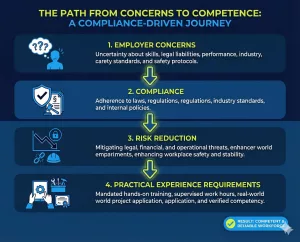
Employers often ask for qualifications even when the job tasks look familiar. Job adverts list certificates, regulated training, or specific levels of knowledge that are expected before an application is even reviewed. For many working adults, this creates confusion.
You already know how to do the work. Why does a certificate suddenly matter?
The answer is not about intelligence or ability. It is about how employers measure capability at scale. When organisations review hundreds of applications, qualifications become a structured way to identify candidates who have verified knowledge aligned with national standards.
This is where a Level 2 qualification begins to change how employers view a candidate. It transforms experience into something that can be formally recognised, verified, and trusted.
For many working adults in England, gaining a level 2 qualification becomes the turning point between being seen as experienced and being seen as professionally qualified.
Table of Contents
Quick Answer: Do Employers Value a Level 2 Qualification?
Yes. A Level 2 qualification shows employers that your knowledge has been formally assessed against nationally recognised standards. These qualifications are regulated by Ofqual and awarded by recognised bodies such as NCFE or TQUK. For many roles across health care, childcare, administration, and business support, employers view a level 2 qualification as evidence that a candidate understands professional practices, compliance responsibilities, and structured workplace standards.
What This Means For You
A level 2 qualification can change how employers interpret your experience.
This applies to you if:
• You have work experience but no formal qualifications
• Your CV reflects years in the same role without recognised certification
• Job listings often mention Level 2 requirements
• You want to move into care, education support, administration, or specialist roles
• You want proof of competence that employers recognise nationally
This may not apply if:
• You already hold higher-level professional qualifications
• Your role requires specialist licensing beyond Level 2
Why it matters
• Research from the UK Commission for Employment and Skills Employer Skills Survey found that over 72% of employers consider formal qualifications when evaluating candidates.
• Roles across health, childcare, administration, and support sectors frequently list Level 2 as a baseline requirement
• Qualifications make experience visible and verifiable to employers
A level 2 qualification turns knowledge gained through work into something structured and recognised across industries.

Why Employers Pay Attention to Level 2 Qualifications
Employers face a simple challenge when reviewing job applications.
They must evaluate hundreds of candidates quickly and determine who has the skills to perform the role effectively.
Experience tells part of the story, but qualifications provide standardised evidence of knowledge.
Standardised Knowledge
A level 2 qualification confirms that the learner has studied defined subject areas aligned with national frameworks. This ensures employers know what the qualification represents.
For example:
A Level 2 qualification in health and social care demonstrates knowledge of:
• Safeguarding principles
• Person-centred care
• Communication with vulnerable individuals
• Duty of care standards
Employers recognise these frameworks because they align with sector expectations.
Compliance Requirements
Many sectors operate under strict regulatory environments.
Examples include:
• Care services regulated by the Care Quality Commission (CQC)
• Childcare environments governed by Ofsted standards
• Workplace safety obligations linked to Health and Safety Executive (HSE) regulations
Employers must ensure staff understand compliance responsibilities. A level 2 qualification demonstrates that this knowledge has been assessed.
Professional Signalling
In competitive hiring environments, qualifications act as professional signals.
A level 2 qualification indicates:
• Commitment to professional development
• Willingness to meet industry standards
• Ability to complete structured training
These signals influence employer perception long before interviews take place.

Recommended Level 2 Courses
Level 2 Certificate in Understanding Autism
Level 2 Certificate in Understanding Principles of Dementia Care
Level 2 Certificate in Counselling Skills
Explore the full catalogue of Level 2 qualifications available through My Free Course to find training aligned with your goals.
The Mechanism Explained: How Government-Funded Qualifications Work
Many learners are surprised to discover that certain qualifications can be fully funded through government initiatives.
Understanding how this system works is important for building trust and clarity.
The Adult Skills Fund
The Adult Skills Fund (ASF) is a UK government initiative designed to support adult education and address national skills shortages.
The funding supports training that helps adults gain qualifications aligned with employment needs.
How the Funding Flow Works
The system operates through a structured pathway:
Government → Adult Skills Fund → Accredited Colleges → My Free Course → Learner
Each part of this chain has a defined role.
Government
Allocates funding to address national workforce skills gaps.
Adult Skills Fund
Distributes funding to approved education providers.
Accredited Colleges
Deliver regulated qualifications awarded by organisations such as NCFE or TQUK.
My Free Course
Connects learners with colleges delivering funded qualifications.
Learner
Studies online and completes coursework to achieve certification.
Why These Qualifications Are Funded
Government funding is directed toward areas where workforce demand is increasing.
Examples include:
• Health and social care
• Mental health support
• Child development and education support
• Business administration and digital skills
According to the UK Department for Education, sectors such as health and care are expected to require hundreds of thousands of additional workers by the end of the decade.
Funding education helps close these gaps.
Why Commitment Matters
Because these qualifications are publicly funded, learners are expected to engage seriously with coursework and assessments.
Completion ensures the funding investment results in real workforce skills.
Proof and Credibility Signals Employers Recognise
When employers review a level 2 qualification, they often check several signals of credibility.
Ofqual Regulation
The Office of Qualifications and Examinations Regulation (Ofqual) ensures qualifications meet national standards.
Regulated qualifications follow structured learning outcomes and formal assessment criteria.
Awarding Bodies
Many Level 2 qualifications are awarded by recognised bodies such as:
• NCFE
• TQUK
These organisations design qualifications used across education and training providers nationwide.
Employer Recognition
Employers trust regulated qualifications because they reflect consistent learning frameworks.
This makes a level 2 qualification a reliable indicator of workplace readiness.

National Skills Gaps Driving Demand for Qualifications
The UK labour market is undergoing significant changes.
Many sectors now face shortages of trained workers.
Health and Social Care
Skills for Care’s Workforce Intelligence report estimated more than 150,000 vacancies across England’s adult social care sector.
Employers increasingly look for candidates who understand care principles and safeguarding responsibilities.
Digital Skills
Government reports indicate that over 80% of jobs require basic digital skills.
Digital qualifications help workers remain competitive in modern workplaces.
Early Years and Education Support
Demand for staff supporting children with special educational needs continues to rise across schools and childcare settings.
Qualifications help employers ensure staff understand safeguarding and developmental support.
A level 2 qualification prepares learners for entry-level responsibilities within these sectors.
Step-by-Step: How the Process Works in Practice
1. Check Eligibility
Learners first confirm whether they meet eligibility criteria.
Common requirements include:
• Age 19 or older
• Living in England
• Meeting income guidelines
• Postcode eligibility based on funding availability
A postcode checker helps confirm whether funding is available in your area.
Don’t assume you’re ineligible My Free Course walks you through the process step by step.
2. Apply
After confirming eligibility, learners submit an application through the course platform.
Applications are then processed by accredited colleges delivering the qualification.
3. Study Online
Courses are delivered through flexible online learning environments.
Learners complete modules, coursework, and assessments at their own pace.
This structure supports adults balancing work, family responsibilities, and study.
4. Achieve Certification
Once coursework is completed and assessed, learners receive a regulated Level 2 certificate from the awarding body.
This qualification can then be included on CVs and job applications.
Common Misunderstandings About Level 2 Qualifications
“Level 2 is too basic to matter”
A level 2 qualification is designed as a foundation credential.
Many roles list it as the minimum requirement for entry-level professional positions.
“Experience is enough”
Experience is valuable, but qualifications help employers verify knowledge.
When comparing candidates, employers often prioritise applicants with recognised certification.
“These qualifications are only for students”
Most learners completing Level 2 courses are working adults returning to education.
Flexible online delivery supports people studying alongside jobs or family responsibilities.
Internal Learning Resources
You may also find these guides helpful:
• Understanding government funded qualifications
• How eligibility works for adult education funding
• Career pathways with Level 2 certificates
These resources explain how funded training connects to employment opportunities.
Trustpilot reviews from learners who completed funded courses also provide additional perspective on the learning process.
Disclaimer
Tuition for many qualifications is funded through the UK Government’s Adult Skills Fund, which supports adult education across England.
Funding is allocated to accredited colleges delivering regulated qualifications. In some cases, partner colleges may charge a small administration fee, typically between £50 and £100, which is clearly communicated before enrolment.
If you have questions about course availability, funding eligibility, or the application process, you can contact the support team for guidance.
Support Email: [email protected]
Found this helpful? There’s so much more to discover. Below, you’ll find more guides and tips designed to support your learning goals and give you even greater clarity as you explore new opportunities.


Learn more and apply today at www.myfreecourse.co.uk
This content is for informational purposes only and does not constitute formal advice. Course availability, funding criteria and eligibility requirements are subject to change. Please visit MyFreeCourse.co.uk or contact us directly for the most up-to-date information.
FAQs
Does a Level 2 qualification really help with employment?
Yes, a level 2 qualification can significantly influence how employers evaluate candidates. Many sectors use Level 2 as a benchmark for entry-level roles because it demonstrates structured knowledge aligned with professional standards. When a qualification is regulated by Ofqual and awarded by recognised organisations such as NCFE or TQUK, employers understand exactly what the certification represents.
For example, care providers must ensure staff understand safeguarding, duty of care, and communication practices with vulnerable individuals. A regulated level 2 qualification confirms that these topics have been studied and assessed. Employers therefore view the qualification as evidence that a candidate has completed formal learning aligned with national frameworks.
In addition to demonstrating knowledge, a qualification signals commitment to professional development. Candidates who complete recognised training often stand out when employers compare applicants with similar experience. When included on a CV, a level 2 qualification provides employers with measurable proof of capability rather than relying solely on job descriptions or informal learning.
Are Level 2 qualifications recognised across the UK?
Yes. Regulated level 2 qualifications are recognised nationally because they follow frameworks overseen by Ofqual. This regulatory oversight ensures consistency in learning outcomes, assessment standards, and qualification structure.
Awarding organisations such as NCFE and TQUK design qualifications used across colleges and training providers throughout England. Because these qualifications are standardised, employers across sectors understand what the certification represents.
For learners, this national recognition means the qualification remains valuable across different employers and regions. Whether applying for roles in care, childcare support, business administration, or other sectors, a regulated level 2 qualification communicates verified knowledge that employers recognise and trust.
Who is eligible for government funded Level 2 qualifications?
Eligibility for funded level 2 qualifications typically depends on several criteria established by the Adult Skills Fund. Most learners must be aged 19 or older, live in England, and meet income-related guidelines to qualify for funding.
Funding availability may also depend on postcode allocation and local authority arrangements. For this reason, many learners use a postcode checker to confirm whether funding is available in their area before applying.
Once eligibility is confirmed, applications are submitted through platforms such as My Free Course, which connects learners with accredited colleges delivering the training. These colleges then enrol learners into regulated qualifications awarded by recognised organisations like NCFE or TQUK.
Because the funding originates from public investment in workforce development, learners are expected to complete coursework and engage fully with the programme once enrolled.
How long does it take to complete a Level 2 qualification?
Completion time varies depending on the course subject and the learner’s study schedule. Most level 2 qualifications delivered through flexible online learning are designed to be completed within 8 to 16 weeks.
The online format allows learners to study around work schedules and personal responsibilities. Coursework is typically structured into modules that learners complete at their own pace within the allowed timeframe.
This flexibility is particularly helpful for adults returning to education after several years away from formal study. Many learners balance coursework with employment or family responsibilities while progressing through modules gradually.
At the end of the course, assessments are reviewed by the accredited college delivering the qualification, and certificates are issued by the awarding organisation.
Can a Level 2 qualification lead to further study?
Yes. A level 2 qualification often acts as a foundation step that prepares learners for more advanced training. Many learners choose to progress into Level 3 qualifications, which build on the knowledge gained at Level 2 and open additional career pathways.
For example, learners who complete Level 2 qualifications in health and social care, childcare, or counselling frequently continue into more specialised training or higher-level certifications.
Because Level 2 courses introduce structured learning, coursework assessment, and subject fundamentals, they help learners rebuild confidence in studying while gaining recognised credentials.
This progression pathway is one reason government funding supports Level 2 qualifications. They help adults re-enter education and gradually build qualifications that support long-term career mobility.