
For many families, the first signs of are subtle. A child reads the same sentence repeatedly without fluency. Spelling remains unpredictable despite practice. Numbers appear familiar one day and confusing the next. Instructions are heard but not retained. Teachers may describe the learner as bright yet inconsistent. Parents often sense something deeper but struggle to articulate what that difference might be. This article explores Specific Learning Difficulties Explained.
The difficulty is not a lack of effort. It is not a lack of intelligence. Yet the uncertainty can create frustration, reduced confidence, and quiet self doubt. Without clarity, families may search for answers and encounter simplified explanations that focus only on dyslexia, overlooking a broader and more complex picture.
Specific Learning Difficulties are frequently misunderstood. They are not limited to reading challenges. They can affect memory, processing speed, organisation, coordination, numeracy, and written expression. Understanding what Specific Learning Difficulties truly involve is the first step towards informed support, structured advocacy, and confident educational decisions.
Table of Contents
Quick Answer: What Are Specific Learning Difficulties?
What are Specific Learning Difficulties?
Specific Learning Difficulties are recognised neurodevelopmental differences that affect particular areas of learning, such as reading, spelling, writing, numeracy, memory, coordination, or information processing, while overall intellectual ability remains within the typical range.
They include dyslexia, dyscalculia, dyspraxia, dysgraphia, and related processing differences. These conditions are recognised within UK education policy frameworks and supported through structured guidance, reasonable adjustments, and regulated training.
What This Means For You
This information applies to you if:
- You support a child or young person who struggles with reading, writing, spelling, or maths despite sustained effort
- You work in childcare, early years, education, or support roles
- You want structured understanding aligned with UK frameworks rather than informal online advice
- You are considering a Level 2 qualification to strengthen your SEND knowledge
This may not apply if:
- You are seeking a clinical diagnosis rather than educational understanding
- You require urgent medical or specialist intervention
Why this matters:
- Early clarity protects confidence
- Structured knowledge improves advocacy
- Formal qualifications strengthen professional credibility
- Employers increasingly expect regulated understanding of Specific Learning Difficulties
What Are Specific Learning Difficulties Explained In Detail?
Specific Learning Difficulties refer to distinct neurological processing differences that impact certain academic skills while leaving overall cognitive ability intact. They are formally recognised within the Special Educational Needs and Disability Code of Practice, which guides schools and local authorities across England.
Unlike general learning difficulties, Specific Learning Difficulties do not reflect lower intelligence. Instead, they reflect differences in how information is processed, organised, and retrieved.
Common areas affected include:
- Phonological awareness and decoding
- Working memory capacity
- Processing speed
- Visual or auditory discrimination
- Motor planning and coordination
- Executive functioning, including organisation and task sequencing
These differences may coexist. A learner may present with both dyslexia and dyspraxia, or dyscalculia alongside working memory challenges.
Understanding that the difficulty is specific rather than global shapes how support should be delivered. It influences classroom adjustments, intervention design, and communication strategies between home and school.

Types of Specific Learning Difficulties
Dyslexia
Dyslexia affects reading accuracy, spelling, and decoding skills. It can involve phonological processing differences and slower retrieval of written language. The British Dyslexia Association provides national guidance on identification and evidence informed support.
Dyscalculia
Dyscalculia affects number sense, mathematical reasoning, and numerical memory. Learners may struggle to understand numerical relationships or retain arithmetic procedures despite adequate teaching.
Dyspraxia
Dyspraxia, also known as Developmental Coordination Disorder, affects motor planning and coordination. It may influence handwriting, organisation, and physical sequencing tasks.
Dysgraphia
Dysgraphia affects written expression, handwriting fluency, and organisation of written ideas.
Processing Differences
Some Specific Learning Difficulties relate to auditory or visual processing differences, affecting how spoken or written information is interpreted.
A Level 2 qualification in Understanding Specific Learning Difficulties explores these distinctions in greater depth, providing structured knowledge aligned with UK guidance.
How Specific Learning Difficulties Differ from General Learning Difficulties
This distinction is essential for accurate support planning.
General learning difficulties involve broader cognitive impairment affecting multiple areas of development and daily functioning.
Specific Learning Difficulties affect isolated academic domains while intellectual ability remains typical.
This difference influences:
- Educational planning
- Education, Health and Care Plan assessments
- Classroom adjustments
- Targeted intervention design
- Parental advocacy conversations
Clarity prevents inappropriate labelling and ensures proportionate, evidence informed support.
Legal and Educational Framework in England
Specific Learning Difficulties are recognised within:
- The Special Educational Needs and Disability Code of Practice
- The Equality Act 2010
- Department for Education inclusion guidance
Schools and early years settings have a duty to make reasonable adjustments for learners with recognised SEND needs. Understanding Specific Learning Difficulties supports compliance with these duties and strengthens collaborative working between families and professionals.
The Mechanism Explained: How Government Funded Level 2 Qualifications Work
Understanding Specific Learning Difficulties does not rely on informal awareness alone. Regulated Level 2 qualifications provide structured and assessed knowledge.
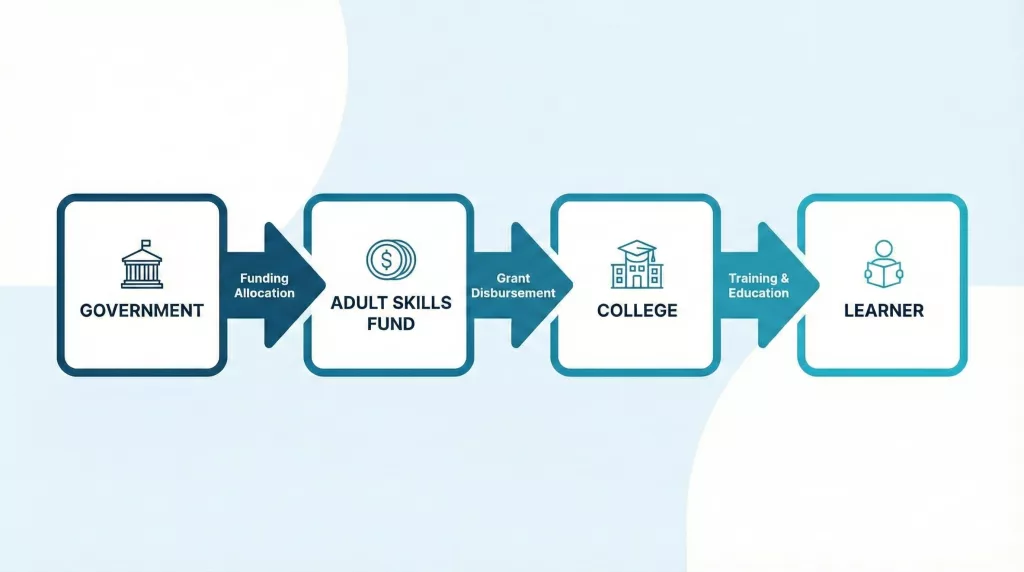
Funding in England operates through the following pathway:
Government → Adult Skills Fund → Accredited Colleges → My Free Course → Learner
The Adult Skills Fund is a government initiative designed to close national skills gaps and strengthen workforce capability. Funding is allocated to Ofqual regulated colleges, which deliver Level 2 qualifications awarded by bodies such as NCFE and TQUK.
My Free Course connects eligible adult learners in England to these accredited colleges.
The qualification can be fully funded if eligibility criteria are met because SEND awareness and inclusive practice are national priorities.
Public funding is allocated per learner enrolment. Commitment to completion ensures responsible use of taxpayer funded education.
Don’t assume you’re ineligible My Free Course walks you through the process step by step.
Why Understanding Specific Learning Difficulties Matters Nationally
The Department for Education reports continued growth in identified SEND needs across England. Inclusive practice is no longer optional. It is embedded into inspection frameworks and safeguarding responsibilities.
Understanding Specific Learning Difficulties supports:
- Inclusive classroom design
- Compliance with SEND statutory guidance
- Improved parental advocacy
- Workforce readiness in childcare and education
- Clearer communication between professionals and families
Employers increasingly expect formal knowledge rather than informal awareness. A Level 2 qualification demonstrates structured understanding aligned with national standards.
Proof and Credibility Signals
- Qualifications are regulated by Ofqual
- Awarding bodies include NCFE and TQUK
- Content aligns with the SEND Code of Practice
- Recognised by employers in education and childcare
- Supports Equality Act compliance duties
These elements establish authoritativeness and trustworthiness.
Step by Step: How It Works in Practice
- Check Eligibility
Confirm you are aged 19 or over, live in England, and meet income or postcode criteria. Use the postcode checker to confirm funding availability in your area before applying. - Apply Online
Submit your application for the Level 2 Understanding Specific Learning Difficulties qualification. - Study Online
Complete coursework based modules flexibly, with no exams. - Tutor Support
Receive structured guidance and feedback from qualified tutors. - Get Certified
Receive an Ofqual regulated Level 2 certificate awarded by NCFE or TQUK.

Common Misunderstandings
Specific Learning Difficulties only mean dyslexia
They include multiple processing differences beyond reading.
They indicate low intelligence
They do not reflect intellectual ability.
Support is only relevant within schools
Parents, carers, and professionals all benefit from structured understanding.
Online qualifications are not recognised
Level 2 qualifications delivered by Ofqual regulated colleges are nationally recognised.
Recommended Level 2 Qualifications
The following Level 2 qualifications support structured understanding within SEND and child support roles:
Understanding Specific Learning Difficulties Level 2
Understanding Autism Level 2
Children and Young People’s Mental Health Level 2
Found this helpful? There’s so much more to discover. Below, you’ll find more guides and tips designed to support your learning goals and give you even greater clarity as you explore new opportunities.


Eligibility rules apply. Funding availability depends on age, residency in England, income status, and postcode allocation under the Adult Skills Fund. Course availability may vary.
Learn more and apply today at www.myfreecourse.co.uk
This content is for informational purposes only and does not constitute formal advice. Course availability, funding criteria and eligibility requirements are subject to change. Please visit MyFreeCourse.co.uk or contact us directly for the most up-to-date information.
For extra help or questions, please contact us at [email protected].
MyFreeCourse.co.uk supp
FAQs
Who is eligible to study Specific Learning Difficulties fully funded?
Eligibility for a funded Level 2 qualification in Understanding Specific Learning Difficulties is determined by Adult Skills Fund rules set by the UK Government. In most cases, learners must be aged 19 or over, live in England, and meet income related criteria. Funding availability can also vary depending on postcode allocation and local authority arrangements, as some areas operate under devolved funding structures.
Because funding is allocated to accredited colleges rather than directly to individuals, eligibility must be confirmed before enrolment. This is why using the postcode checker is essential. It confirms whether funding is available in your area and whether you meet the criteria under current Adult Skills Fund guidance.
The purpose of this funding model is to strengthen workforce capability in priority areas such as SEND, childcare, and inclusive education. When eligibility is confirmed and enrolment is completed, the cost of tuition is covered through public funding. Learners are then expected to engage with coursework and complete the qualification responsibly, as funding is allocated per learner.
Is the Level 2 qualification recognised by employers?
Yes. The Level 2 qualification in Understanding Specific Learning Difficulties is regulated by Ofqual, the qualifications regulator for England. It is awarded by recognised awarding bodies such as NCFE or TQUK, which operate under national quality assurance frameworks.
Employers in early years settings, primary and secondary education, childcare provision, and SEND support roles recognise regulated Level 2 qualifications as evidence of structured, assessed knowledge. Unlike informal online courses, regulated qualifications require learners to complete coursework that demonstrates understanding of statutory frameworks, inclusive strategies, and educational responsibilities.
During recruitment processes and internal promotion decisions, holding a regulated Level 2 certificate signals professional commitment and alignment with national standards. In regulated environments where inspection and compliance matter, formal qualifications provide documented evidence of competence.
Does this qualification replace a clinical diagnosis?
No. A Level 2 qualification in Understanding Specific Learning Difficulties does not replace clinical diagnosis, educational psychology assessments, or statutory processes such as Education, Health and Care Plan evaluations.
Diagnosis is carried out by qualified professionals including educational psychologists, specialist teachers, paediatricians, or multidisciplinary assessment teams. These assessments consider cognitive testing, behavioural observations, and educational history.
The qualification instead provides structured educational knowledge. It helps learners understand common indicators, evidence informed support strategies, and the legal framework surrounding SEND provision. This knowledge strengthens communication with schools, improves advocacy conversations, and supports proportionate classroom adjustments. It enhances understanding without replacing professional assessment pathways.
How long does the Level 2 course take to complete?
Completion time varies depending on study pace, personal responsibilities, and prior knowledge. Because the qualification is delivered online and assessed through coursework rather than formal examinations, learners can progress flexibly.
Most learners complete within several weeks to a few months. The structure typically includes modules covering definitions, statutory frameworks, support strategies, and practical application. Tutor support is provided to guide progression, answer questions, and offer structured feedback on assignments.
Flexible delivery makes the qualification suitable for working adults, parents, and professionals already employed within childcare or education settings. However, learners are expected to commit time to reading, reflection, and written responses in order to meet assessment standards.
Why is the qualification fully funded?
The Government funds Level 2 qualifications through the Adult Skills Fund to address national skills gaps and improve workforce capability across priority sectors. SEND awareness, inclusive education, and child support roles are recognised areas where structured training improves outcomes for learners and strengthens compliance with statutory duties.
Funding is allocated to accredited colleges regulated by Ofqual. These colleges deliver nationally recognised qualifications awarded by bodies such as NCFE and TQUK. My Free Course connects eligible adult learners in England to these funded opportunities.
The purpose of funding is not casual learning. It is designed to improve professional standards, strengthen inclusive practice, and support workforce development. When eligibility criteria are met, tuition costs are covered through public funding. Learners are expected to complete coursework and engage responsibly, ensuring that funding contributes to measurable skill development.