If you’re an adult learner in England trying to return to study or upskill for your next job opportunity, you’ll likely come across a few key terms: Level 2 qualifications, General Certificate of Secondary Education (GCSE) – Typically studied between the agess of 14-16, and Functional Skills. They often seem similar but knowing the difference can make or break your next step forward.
This article unpacks what these qualifications mean, how they compare, and why choosing the right one depends on your goals, timeline, and eligibility. Plus, we’ll explain how to access them online for free if you qualify.
Quick Answer
Level 2 qualifications in England are broadly equivalent to a GCSE grade 4 to 9. They include GCSEs, Functional Skills qualifications in English and Maths, and vocational Level 2 certificates across sectors including care, business, education, and health. For eligible adults aged 19 and over living in England, vocational Level 2 certificates and Functional Skills qualifications can be fully funded through the Adult Skills Fund, with no tuition fees to pay.
Table of Contents

What Are Level 2 Qualifications, The General Certificate of Secondary Education (GCSE) and Functional Skills?
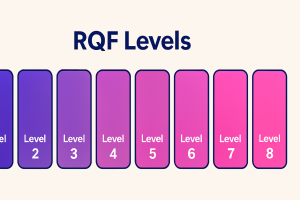
Level 2 qualifications sit on the Regulated Qualifications Framework (RQF) at the same level as a GCSE grade 4 to 9. They include a range of nationally recognised options that serve different learners, purposes, and pathways.
Key Definitions in the UK Education System
Level 2 qualifications are considered equivalent to the General Certificate of Secondary Education grades 4–9 (or A* to C in the old system). They include a variety of nationally recognised options:
- GCSEs
- Functional Skills in Maths and English
- National Vocational Qualification(NVQs) and vocational certificates
- Industry-specific Level 2 awards
Each one offers a pathway to employment or further education, but the right choice depends on your learning style, career plans and time commitment.
GCSE vs Functional Skills vs Vocational Level 2: A Side-by-Side Comparison
The table below sets out the key differences between the three types of Level 2 qualification available to adult learners in England.
| Factor | GCSE | Functional Skills | Vocational Level 2 Certificate |
|---|---|---|---|
| Best for | School leavers and adults needing university-standard English or Maths recognition. | Adults returning to study, apprenticeship applicants, and those needing a flexible, fast qualification. | Adults looking to enter or progress in a specific sector or career area. |
| Typical duration | 9 to 12 months. | 8 to 12 weeks. | 6 to 12 weeks. |
| Assessment | Written exams plus coursework. | Portfolio and online tests with no traditional exams. | Coursework and written assignments with no exams. |
| University entry | Often required for teacher training, nursing, and some higher education programmes. | Accepted for Access to HE Diplomas and many vocational higher education routes. | Depends on the course and the institution. |
| Employer recognition | Very widely recognised. | Widely recognised in vocational and apprenticeship routes. | Valued in specific sectors and often required for CQC and compliance-related roles. |
| Online and self-paced? | Not typically. Usually delivered on a term-based timetable with scheduled exam sessions. | Yes. Fully online and self-paced options are available. | Yes. Fully online and self-paced through My Free Course. |
| Government funded? | Not usually through the Adult Skills Fund. | Yes, for eligible adults aged 19 and over. | Yes, for eligible adults aged 19 and over. |
Both GCSEs and Functional Skills are classed as Level 2 qualifications, but they are not always interchangeable. Check the entry requirements for your intended next step, whether that is an apprenticeship, a job application, or further study before choosing.
Which Courses Count as Level 2 Qualifications?
- General Certificate of Secondary Education (typically studied at school, but available to adults)
- Online functional skills courses in Maths or English
- Vocational certificates in Business, Health & Social Care, and Digital Skills
- Other accredited courses aligned to the Regulated Qualifications Framework (RQF)
Why Understanding the Difference Matters
Entry Requirements for Jobs and Study
Employers and education providers often require a minimum of Level 2 qualifications in Maths and English. However, whether you have a General Certificate of Secondary Education or a functional skills certificate can influence how quickly you can progress or apply for further study.
For example:
- A university teacher training course may require GCSEs in English and Maths
- An apprenticeship may accept functional skills instead
Understanding the differences helps you make the right investment of your time.
Which One Fits Your Personal Learning Style?
Functional skills are often more accessible for adult learners:
- Shorter duration (8–12 weeks vs up to a year for GCSEs)
- Practical, real-world content
- Modular and self-paced options
The General Certificate of Secondary Education, while still available to adults, tends to follow a more traditional format with exams and term-based learning.
General Certificate of Secondary Education in the UK: Traditional Pathway Explained
What Came Before: O-Levels and the Birth of GCSEs
Before General Certificate of Secondary Education were introduced in the late 1980s, students in England typically sat O-Levels (Ordinary Levels). O-Levels were part of the General Certificate of Education system and were known for being more academically rigid, often geared toward learners expected to move into A-Levels and university study.
In contrast, General Certificate of Secondary Education were developed to be more inclusive and widely available, combining academic rigour with coursework and accessible assessment methods. For adult learners who may have completed their schooling before GCSEs were introduced, understanding this evolution helps contextualise Level 2 qualifications today.
What Makes It Unique?
The General Certificate of Secondary Education is the standard qualification for school leavers in the UK. They’re usually assessed by written exams and carry strong recognition by employers and universities.
In the UK, they are:
- Offered in a wide range of subjects
- Usually studied over a 9–12 month period
- Graded from 1–9 (with 4 being the minimum pass grade)
Assessment, Duration, and Recognition
Adult learners who want to gain a General Certificate of Secondary Education may study through:
- Evening classes
- Online courses
- Distance learning providers
Many Level 2 qualifications offer the same educational level, but not all are interchangeable.
Online Functional Skills: A Flexible Alternative
What Are Functional Skills?
These qualifications are practical equivalents to GCSEs in Maths and English. They focus on skills needed in everyday life and work, like managing a budget or writing professional emails.
They are an ideal route for learners who:
- Need a quick route to a Level 2 qualification
- Prefer bite-sized online learning
- Want to improve confidence without traditional exams
When Functional Skills Make More Sense Than GCSEs
- If you need to meet apprenticeship or job criteria quickly
- If you’re returning to learning after a long time
- If you need a more flexible, online study format
Online functional skills courses are fully government funded for eligible learners in England and can be completed in as little as 8 weeks.

Are Functional Skills and General Certificate of Secondary Education Equivalent?
How They Compare in the Eyes of Employers
Yes, both are classed as Level 2 qualifications, but perceptions can differ:
- GCSEs are sometimes preferred for university courses
- Functional Skills are widely accepted in apprenticeships, vocational training, and employment
Both are valid, but context matters. If you’re unsure, check with your course provider or employer.
University Admissions and Progression
- Teacher training and nursing programmes usually require the General Certificate of Secondary Education
- Functional Skills may be accepted for Access to Higher Education Diplomas or NVQs
Always review the entry criteria for your intended next step.
Which Level 2 Qualification Courses Are Available Through My Free Course?
My Free Course connects eligible adult learners with funded Level 2 vocational certificates across a range of sectors. The courses below are available online, fully funded through the Adult Skills Fund for eligible learners, and result in a nationally recognised NCFE or TQUK accredited certificate.
| Sector | Example Courses |
|---|---|
| Health and Social Care | Level 2 Certificate in Preparing to Work in Adult Social Care; Level 2 Certificate in Principles of Care Planning; Level 2 Certificate in Understanding Dignity and Safeguarding |
| Mental Health and Wellbeing | Level 2 Certificate in Awareness of Mental Health Problems; Level 2 Certificate in Understanding Children and Young People’s Mental Health; Level 2 Certificate in Self-harm and Suicide Awareness |
| Children, Young People and SEN | Level 2 Certificate in Understanding Autism; Level 2 Certificate in Understanding Behaviour that Challenges; Level 2 Certificate in Special Educational Needs and Disability |
| Business and Professional Skills | Level 2 Certificate in Principles of Business Administration; Level 2 Certificate in Principles of Team Leading; Level 2 Certificate in Principles of Customer Service |
| Nutrition, Medication and Clinical | Level 2 Certificate in Nutrition and Health; Level 2 Certificate in Safe Handling of Medication; Level 2 Certificate in the Principles of the Prevention and Control of Infection |
| Counselling and Support Skills | Level 2 Counselling Skills; Level 2 Certificate in Understanding Domestic Abuse; Level 2 Certificate in Understanding Workplace Violence and Harassment |
| Digital and Data Skills | Level 2 Certificate in Principles of Cyber Security; Level 2 Certificate in Understanding Data Protection and Data Security; Level 2 Understanding Coding |
Here are common examples:
- Certificate in Digital Marketing
- Certificate in Business Administration
- Functional Skills in English and Maths
- General Certificate of Secondary Education in Maths, English or Science
These are all counted as Level 2 qualifications and funded under the Adult Education Budget.
How to Apply for a Funded Level 2 Certification Online
Who Is Eligible Under the Adult Education Budget?
You may qualify if you:
- Are aged 19 or over on 31 August
- Live in England
- Have settled, pre-settled or equivalent residency
- Don’t already hold the same qualification at Level 2
Where to Apply and What You’ll Need
My Free Course offers a fast-track way to apply for government-funded qualifications online. You’ll need to:
- Complete a short eligibility form
- Upload ID and proof of address
- Choose your course
Courses start year-round and fit around work and family life.
How a Level 2 Qualification Affects Career Progression
A Level 2 qualification is often the first formal credential that changes how an employer views a candidate. For people already working in care, education, hospitality, or other sectors where formal qualifications were not required to start, a Level 2 certificate represents something specific: visible proof that experience has been formalised.
The impact on career progression is clearest in sectors with defined qualification pathways. In health and social care, for example, a Level 2 certificate in a relevant subject opens access to senior care worker roles, specialist responsibilities, and Level 3 study. In education support, a Level 2 in understanding autism, behaviour, or SEN opens access to roles that require demonstrable knowledge, not just experience.
For those working in business, administration, or team leadership, a Level 2 certificate in principles of business administration or team leading provides formal recognition for responsibilities many people already hold informally. The qualification does not change what you do; it changes how that work is recognised and evidenced.
Common progression routes after a Level 2 qualification:
- Progress to a Level 3 qualification in the same or a related subject area
- Apply for senior or specialist roles that require a minimum Level 2 qualification
- Use the qualification as evidence of competence in job applications and performance reviews
- Access apprenticeship programmes that require Level 2 English and Maths as a condition of entry
Build toward an Access to Higher Education Diploma or other routes into university study
For learners who already hold a Level 2 qualification and want to understand what Level 3 study involves, see: Free Level 3 Courses for Adults: Your A-Level Equivalent Qualification.
Conclusion and Disclaimer
Level 2 qualifications include both the General Certificate of Secondary Education and online functional skills, but they serve different learners and purposes. If you’re looking to reskill, upskill, or take the next step in your education, understanding the right pathway is key.
This article is for informational purposes only. Please check with individual providers and course pages for the most up-to-date eligibility and progression criteria.
Found this helpful? There’s so much more to discover. Below, you’ll find more guides and tips designed to support your learning goals and give you even greater clarity as you explore new opportunities.


Frequently Asked Questions
What is a Level 2 certification?
A Level 2 qualification is a nationally recognised credential broadly equivalent to a GCSE grade 4 to 9. It includes GCSEs, Functional Skills qualifications in English and Maths, and vocational Level 2 certificates in subjects such as health and social care, business administration, and mental health awareness.
Is a Functional Skills qualification the same as a GCSE?
Both are Level 2 qualifications, but they are not always interchangeable. Functional Skills are widely accepted in apprenticeships, vocational training, and most employment routes. Some university programmes, including teacher training and nursing, may specify GCSEs rather than Functional Skills. Always check the entry requirements for your intended next step.
Can I do Functional Skills or a vocational Level 2 course online for free?
Yes, if you meet the eligibility criteria under the Adult Skills Fund. Tuition is fully funded for eligible adults aged 19 and over living in England. Some partner colleges may charge an administration fee of between £50 and £100 for registration and certification. My Free Course does not charge this fee.
What if I already have a Level 2 qualification?
You may still be eligible for a different Level 2 qualifications in a different subject area. If you already hold a Level 2 in the same subject, you are likely not eligible for funding in that subject again. The eligibility checker will confirm your individual situation.
Which Level 2 qualifications should I choose?
It depends on your goals. If you need flexibility and want to enter or progress in a specific sector, a vocational Level 2 certificate is usually the fastest and most practical route. If you need English or Maths recognition for an apprenticeship or job application, Functional Skills are the accessible adult-learner alternative to GCSEs. If you are aiming for a university course with specific GCSE entry requirements, a GCSE may be necessary.
Do Level 2 qualifications help with career progression?
Yes. A recognised Level 2 qualifications provides formal, externally verified evidence of competence that employers can assess independently. In regulated sectors such as health and social care and education, Level 2 qualifications are often required for specific roles or responsibilities. They also open access to Level 3 study, apprenticeships, and senior positions that require demonstrated knowledge rather than experience alone.
Disclaimer
Tuition fees for eligible learners are fully funded by the Adult Skills Fund. Some partner colleges may charge an administration fee (typically £50-£100) for registration and certification, but not us. At My Free Course, it’s completely free.
This varies by provider. Eligibility depends on individual circumstances, including age, residency, earnings, and prior qualifications. My Free Course acts as an intermediary between learners and partner colleges. Course availability is subject to change. Geographic exclusions apply. This content is for informational purposes only and does not constitute legal or professional advice. Visit MyFreeCourse.co.uk for the most current course and eligibility information.