Let’s be honest: the UK education system can feel like a maze. GCSEs, A levels, diplomas, NVQs and then somewhere in the middle, the mysterious Foundation degree. Is it half a degree? Is it the “CliffsNotes” version of a bachelor’s? Or is it one of those things that sounds fancy but no one can actually explain at parties?
Good news: it’s none of those. This qualification is a solid, respected option that can boost your career or give you a flexible way back into education. And yes, you can even do it through online learning while balancing work, family, and the occasional Netflix binge.
So grab your tea (or coffee, no judgement) and let’s untangle what this programme really is, where it fits in the world of qualification levels, and whether it might be your next best strat.

Table of Contents
What Exactly Is a Foundation Degree?
Think of this route as the “Goldilocks option” of higher education. It’s more advanced than A levels or BTECs, but not as long or expensive as a full bachelor’s. It is an official university-level qualification, usually delivered by colleges and universities working in partnership, and it blends academic theory with real-world, practical learning.
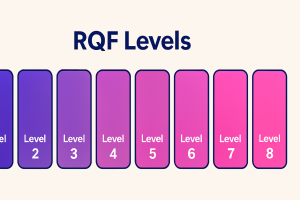
In the UK qualification framework, a Foundation degree sits at Level 5. Translation: you’ve climbed higher than the Level 3 crowd (A levels, NVQs) and the Level 4 bunch (HNCs), but you haven’t yet reached the dizzying heights of a full bachelor’s degree (Level 6).
The point is not to be “less than”. The point is to be strategic. This qualification is designed for people who want career-ready skills without committing to three years of essays, exams, and instant noodles.
Where Does It Fit in Qualification Levels?
Here’s the elevator pitch:
- Level 2: GCSEs or equivalent.
- Level 3: A levels, BTECs, NVQs.
- Level 4: Certificates of Higher Education, HNCs.
- Level 5: Foundation degree, HND.
- Level 6: Bachelor’s degree.
- Level 7: Master’s degree.
So, this programme is a Level 5 qualification. Picture a ladder: you’ve got your GCSEs as the first steps, your A levels as the middle, and then this degree as the sturdy landing where you can decide whether to keep climbing or step off into the working world.
Why Choose This Qualification?
Alright, why should you even consider it? Let’s break it down:
- Time and cost: A Foundation degree usually takes two years full-time or longer part-time. In this economy, it is a smart choice to save money and time compared with a bachelor’s.
- Practical skills: Employers love that you are not just hitting the books but also learning job-ready skills.
- Flexibility: Many courses now offer online learning options, so you can study while holding down a job or juggling family life.
- Progression routes: You can always “top up” later into a bachelor’s degree if you fancy the full works.
It’s not “settling”. It’s picking the smart shortcut that still gets you to the right destination.
How Is It Taught in Practice?
This kind of programme is not just endless lectures and essays (although, yes, you will probably write a few). The whole idea is to combine academic study with practical, hands-on learning.
Expect:
- Assignments and projects instead of just exams.
- Modules that link directly to the workplace.
- Real-world case studies that actually make sense outside the classroom.
Subjects? Everything from healthcare and business to digital tech and education. Basically, if you can imagine a career, there’s probably a qualification to match it.

Funding and Costs Explained
Here is the tricky part: a Foundation degree is classed as higher education. That means tuition fees are involved.
Worry not, because there are ways to make it work:
- You can apply for a student loan through Student Finance England.
- Some employers will sponsor you if the course benefits your job.
- Flexible learning (including online learning) can help you spread the cost and keep earning while you study.
Yes, it is an investment, but it is one that can pay off in career growth, higher salaries, and as a bonus, bragging rights at family dinners.
Alright. You’re curious about a Foundation degree, but maybe you’re also thinking: where do I even start? That’s where we come in.
At My Free Course, we connect adult learners with fully funded, accredited programmes that can build your confidence and help you progress. While Foundation degrees sit at a higher level with tuition fees attached, we also offer government-funded Level 2 and Level 3 online courses in areas like health, business, and digital skills. These can be a brilliant stepping stone if you want to get back into study mode before moving up to Level 5.
Who Can Apply?
Entry requirements vary, but generally you will need Level 3 qualifications such as A levels, a BTEC, or an NVQ.
Here’s the twist: some courses also accept work experience in place of formal qualifications. So if you have been in the industry and built up real skills, you might still qualify.
It is especially popular with:
- Adults returning to education after a break.
- People changing careers who want recognised qualifications.
- Employees looking to upskill without committing to a full three-year degree.
Progression Routes: What Happens After?
So, you finish your course. What next?
You have three solid options:
- Jump straight into work. With a Level 5 qualification under your belt, you are job-ready in many industries.
- Top up to a bachelor’s degree. Usually one extra year full-time or two years part-time, and you have got a full degree.
- Use it as a springboard. Many learners go on to teacher training, nursing, management, or other professional qualifications.
This route is not a dead end. It is a launch pad.
Can You Do It Online?
Delivery is more flexible than ever. More and more universities and colleges are offering Foundation degrees via online learning or blended models.
Why that matters:
- You can study around your life, not the other way around.
- You do not have to relocate or commute.
- You can still access tutors and support through video calls, forums, and online resources.
Caveat: online learning does require a bit of self-discipline. But if you have ever managed to binge a whole TV series in one weekend, this should not be too much of a challenge.

Disclaimer: This content is for informational purposes only and does not constitute formal advice. Course availability, funding criteria and eligibility requirements are subject to change. Please visit MyFreeCourse.co.uk or contact us directly for the most up-to-date information.
For extra help or questions, please contact us at [email protected].
FAQs
1. Is a Foundation degree the same as an HND?
They’re similar (both are Level 5), but a Foundation degree is usually more academic, while an HND is more vocational.
2. Can I do a Foundation degree entirely through online learning?
In many subjects, yes. Healthcare and lab-based courses may need some in-person elements, but plenty of options are fully online.
3. How long does a Foundation degree take to complete?
Typically two years full-time, or three to four years part-time.
4. Can I get a job with just a Foundation degree?
Absolutely. Employers value the mix of theory and practical skills. It is enough to qualify for many roles.
5. How does a Foundation degree compare to a bachelor’s?
It’s shorter, cheaper, and more flexible. But you can top up later to a full bachelor’s if you want.