Medication is one of the most sensitive and tightly regulated areas in health and social care. For care workers, support staff, and supervisors across England, handling medication is not just another daily task. It sits at the intersection of resident safety, legal responsibility, and professional accountability.
Many people working in care find themselves carrying medication-related responsibilities without ever feeling fully confident about the rules behind them. Guidance can feel fragmented. Policies differ between settings. Expectations are often implied rather than clearly explained. This leaves staff unsure about where their responsibility begins and ends, what counts as best practice, and how mistakes are judged.
At the same time, regulatory pressure on care providers has increased. Inspections now look closely at medication storage, administration records, consent procedures, and staff training. Errors, even when unintended, can have serious consequences for residents and for the careers of those involved.
Understanding safe handling of medication is not about fear or blame. It is about clarity. Clear knowledge protects residents from harm, protects organisations from regulatory breaches, and protects individual workers from avoidable professional risk. This article explains what medication handling responsibility actually means in England, how it is regulated, and why recognised training matters.
Table of Contents
Quick Answer: Safe Handling of Medication Explained?
Safe handling of medication refers to the correct storage, administration, recording, and disposal of medicines in line with England’s health and social care regulations. It applies to staff who support individuals with medication and requires formal knowledge of procedures, consent, documentation, and risk management. Accredited Level 2 training helps demonstrate competence and compliance.

What This Means For You
This applies to you if:
- You work or plan to work in adult social care, supported living, domiciliary care, residential settings, or health-adjacent roles
- You support, prompt, administer, store, or record medication as part of care delivery
This does not apply to you if:
- You have no involvement in medication handling, prompting, administration, storage, or record keeping
Why it matters:
- Medication handling errors can lead to safeguarding concerns
- Regulatory action and disciplinary procedures may follow
- Long-term career impact is a real risk
Clear understanding reduces risk for everyone involved.
Recommended Course
Level 2 Certificate in Safe Handling of Medication in Health & Social Care
This Level 2 qualification supports safe practice, compliance, and professional confidence in medication handling roles.
What Safe Handling of Medication Really Covers
Safe handling of medication is often misunderstood as simply giving tablets at the right time. In reality, it covers a much broader and more structured set of responsibilities.
It includes how medication is received, checked, stored, administered, documented, and disposed of. It also includes understanding consent, capacity, confidentiality, infection control, and safeguarding duties connected to medication use.
In England, medication handling responsibilities differ depending on role, setting, and organisational policy. However, the underlying principles remain consistent across regulated care environments.
Key areas include:
- Understanding different types of medication, including prescribed, over-the-counter, and controlled drugs
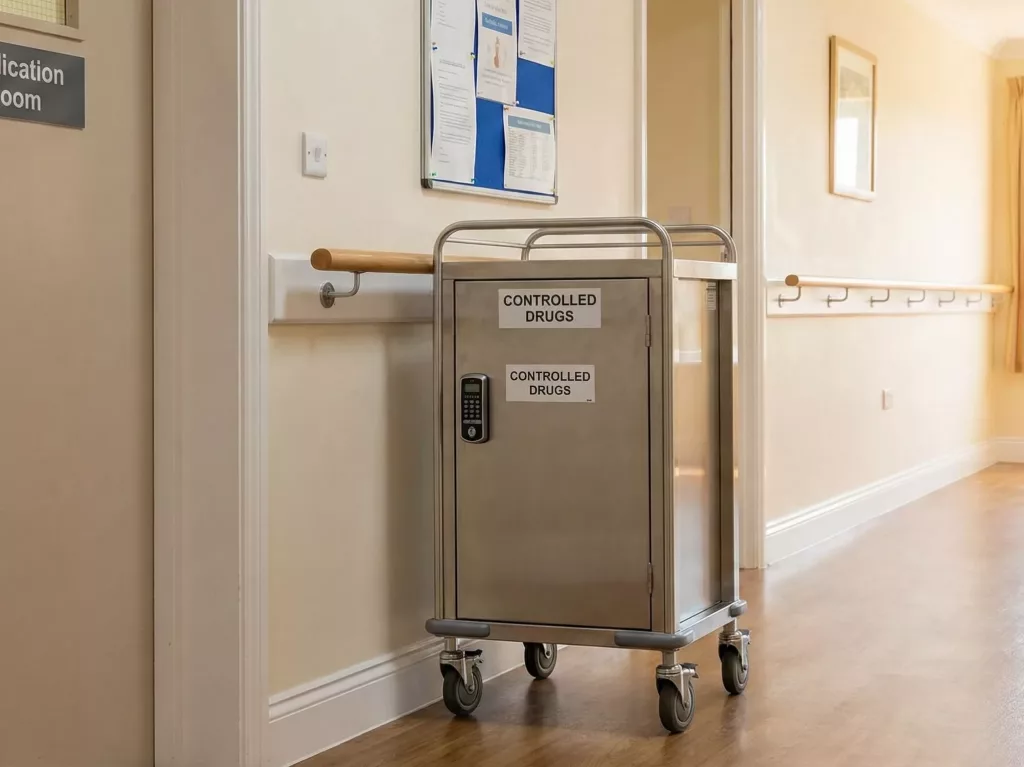
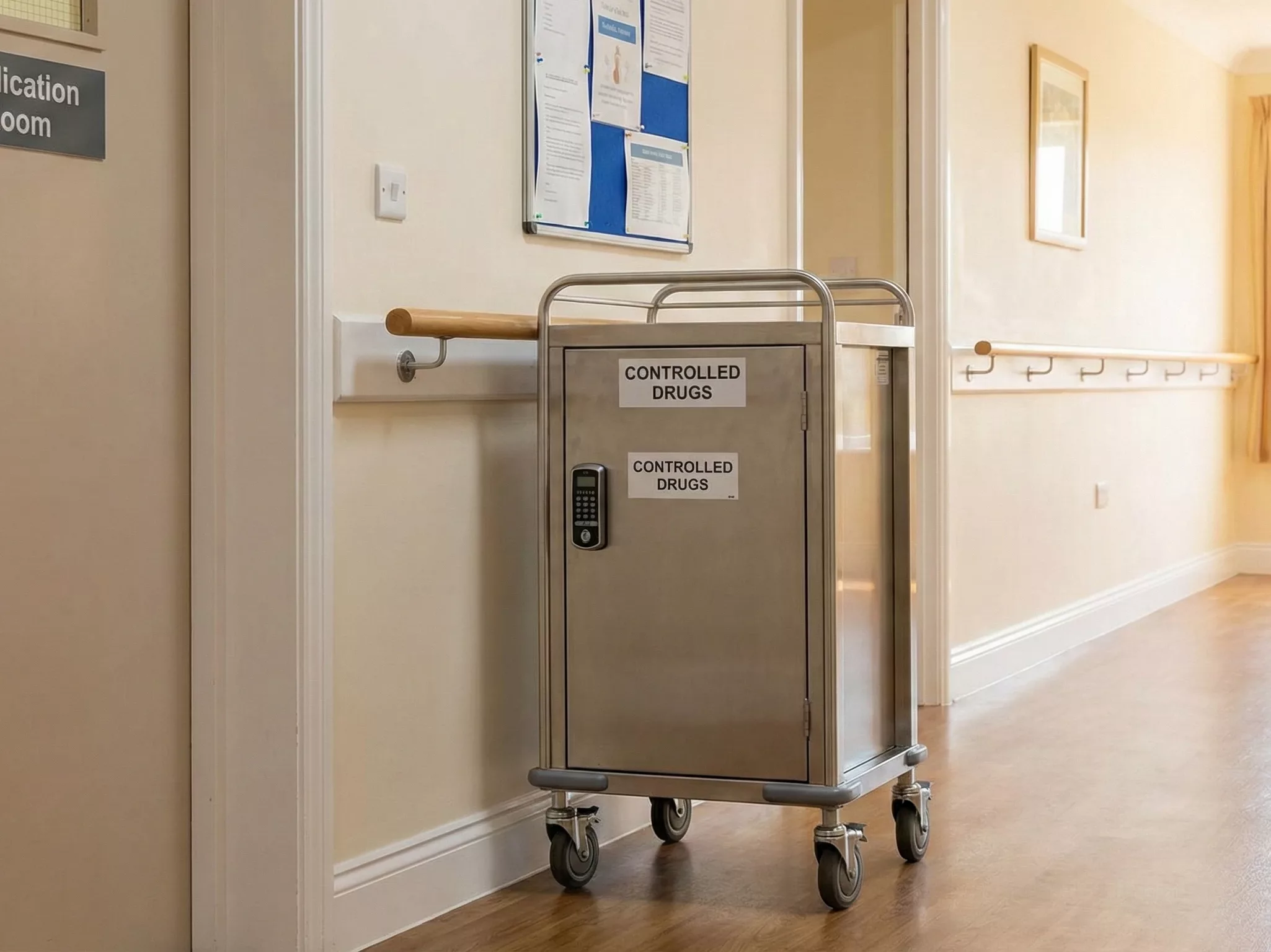
- Safe storage requirements, including temperature control and security
- Correct administration methods and routes
- Accurate record keeping using Medication Administration Records
- Identifying and reporting errors, omissions, or adverse reactions
- Understanding personal accountability within organisational policies
Safe handling of medication is not optional knowledge. It is an expectation embedded into care standards and inspection frameworks.
Legal and Regulatory Framework in England
Medication handling in England sits within a clearly defined regulatory environment.
The Care Quality Commission sets expectations for how care providers manage medicines safely. Inspections assess whether people receive their medication as prescribed, whether staff are trained, and whether systems reduce the risk of harm.
The Health and Social Care Act establishes the duty of care providers to protect service users from avoidable harm. Medication mismanagement can fall directly under breaches of this duty.
Professional guidance from bodies such as The National Institute for Health and Care Excellence (NICE) and the Royal Pharmaceutical Society influences best practice standards used by providers and inspectors alike.
Employers are expected to ensure that staff involved in medication handling are trained, competent, and supervised appropriately. Individuals are expected to follow policy, act within their competence, and escalate concerns.
Understanding safe handling of medication is therefore both a legal safeguard and a professional responsibility.

The Mechanism Explained: How Medication Training Is Funded
Many people are unsure how medication training is delivered and funded in England, particularly when qualifications are described as fully funded.
Medication handling qualifications at Level 2 are funded through the Adult Skills Fund. This is a government programme designed to address national skills gaps and improve workforce safety and competence.
The funding flow works as follows:
Government → Adult Skills Fund → Accredited Colleges → My Free Course → Learner
The government allocates funding to accredited colleges. These colleges deliver regulated qualifications, such as safe handling of medication courses, through approved partners. My Free Course connects eligible learners in England to these funded opportunities.
Don’t assume you’re ineligible My Free Course walks you through the process step by step.
Courses are funded because medication safety is a national priority. Errors create risk for residents, pressure for healthcare systems, and regulatory consequences for providers. Training reduces that risk.
Commitment matters because public funding is allocated per learner. Learners are expected to engage, complete assessments, and apply learning responsibly.
Why Medication Errors Carry Serious Consequences
Medication errors are one of the most common causes of avoidable harm in care settings. This is why regulators focus so heavily on prevention, documentation, and staff competence.
Consequences can include:
- Harm or distress to residents
- Safeguarding investigations
- CQC enforcement action
- Disciplinary procedures
- Loss of professional trust
- Barriers to career progression
Even when errors occur without intent, accountability still applies. Understanding safe handling of medication helps staff recognise risk points early and act appropriately.
Training does not remove responsibility, but it equips individuals with the knowledge to meet expectations confidently.

Proof and Credibility: Why This Knowledge Is Trusted
Safe handling of medication qualifications are not informal courses. They are regulated and quality assured.
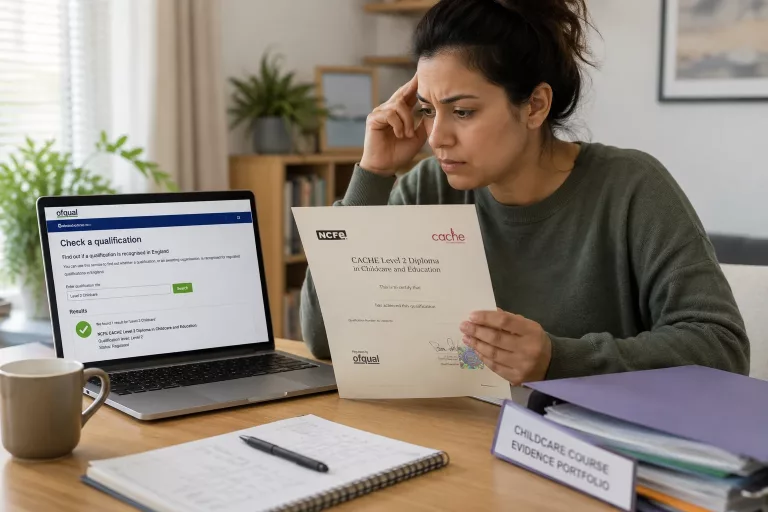
Recognised awarding bodies such as NCFE and TQUK ensure that course content meets national standards. These bodies are regulated by Ofqual, the qualifications regulator for England.
Employers recognise Level 2 medication handling training because it demonstrates assessed understanding, not just attendance. It shows that learners have engaged with legislation, procedures, and risk management principles.
Medication handling competence is also tied to compliance requirements across care settings. During inspections, providers must evidence staff training and competence. Accredited qualifications provide that evidence.
This combination of regulation, assessment, and employer recognition underpins trust.
Step-by-Step: How Medication Training Works in Practice
- Check eligibility
Confirm age, residency in England, and income criteria using the postcode checker. - Apply
Applications are processed through accredited college partners. - Study online
Learning is flexible, coursework-based, and designed around working adults. - Assessment and certification
Learners complete assessments demonstrating understanding of safe handling of medication principles and receive a Level 2 certificate.
Common Misunderstandings About Medication Handling
Medication training is only for nurses
Medication support roles exist across care settings. Many non-clinical staff have medication responsibilities that require formal understanding.
Experience alone is enough
Experience matters, but regulators expect assessed competence. Training formalises knowledge and supports compliance.
Medication errors are always obvious
Many errors are procedural, documentation-based, or related to storage. Understanding systems prevents hidden risk.
Training removes personal responsibility
Training supports responsibility. It does not replace accountability.

Disclaimer, Support, and Further Reading
Eligibility for government funded courses depends on age, residency in England, income, and Adult Skills Fund rules. Availability may vary by postcode and local authority funding arrangements.
You may also find it useful to read related articles on safeguarding responsibilities, care compliance standards, Adult Skills Fund funding, and Trustpilot learner reviews available on our blog.


Learn more and apply today at www.myfreecourse.co.uk
This content is for informational purposes only and does not constitute formal advice. Course availability, funding criteria and eligibility requirements are subject to change. Please visit MyFreeCourse.co.uk or contact us directly for the most up-to-date information.
For extra help or questions, please contact us at [email protected].
MyFreeCourse.co.uk supports you with fully funded qualifications, supportive tutors and flexible learning, so you can start helping others, one step at a time
FAQs
Who is responsible for medication handling in care settings in England?
Responsibility for safe handling of medication in England is shared between care organisations and individual staff members. Employers are legally required to have clear medication policies in place, ensure appropriate training is provided, and maintain systems that reduce the risk of errors. This includes supervision, audits, and ongoing competency checks.
At the same time, individual workers are responsible for following agreed procedures, working within their role and level of competence, and raising concerns if something feels unsafe or unclear. During Care Quality Commission inspections, both organisational systems and staff knowledge are assessed. This is why formal training in safe handling of medication is so important, as it supports both compliance and professional accountability.
Is safe handling of medication training mandatory?
There is no single national law that states a specific medication handling qualification is mandatory for all care staff. However, the Care Quality Commission expects providers to demonstrate that staff involved in medication support are properly trained and competent for their role.
In practice, Level 2 safe handling of medication training is widely used across adult social care as the recognised way to evidence competence. Providers rely on accredited training to show inspectors that staff understand procedures, legislation, and risk management. For individuals, holding a recognised qualification helps demonstrate readiness for medication responsibilities and reduces uncertainty around expectations.
Can medication training support career progression?
Yes. Medication competence is often a key requirement for progression within care roles. Senior care workers, key workers, team leaders, and compliance-focused roles are typically expected to understand medication procedures in detail.
Holding a recognised Level 2 qualification shows employers that you can be trusted with responsibility, documentation, and safeguarding-linked tasks. It can strengthen applications for promotion, support transitions into more regulated roles, and improve job security in settings where medication support is routine. For many workers, medication training becomes a foundation for wider professional development within health and social care.
Does medication handling training include legal and safeguarding responsibilities?
Yes. Accredited safe handling of medication training goes beyond practical administration. It covers the legal and safeguarding framework that surrounds medication use in care settings.
This includes understanding consent and mental capacity, accurate record keeping, error reporting procedures, confidentiality, and how medication safety links to safeguarding duties. Learners are expected to understand how mistakes are identified, reported, and managed in line with organisational policy and regulatory expectations. This broader knowledge helps staff recognise risks early and act appropriately to protect the people they support.
Who is eligible for funded medication handling courses?
Eligibility for funded medication handling courses is based on Adult Skills Fund rules. Learners must usually be aged 19 or over, live in England, and meet income-related criteria. Funding availability can also depend on postcode and local authority priorities.
Because funding is allocated through accredited colleges, eligibility should always be checked before applying. Using the postcode checker helps confirm whether funding is available in your area and whether you meet the criteria. This ensures that public funding is directed to learners who are eligible and ready to engage with the qualification.
Is this a proper qualification? Will employers recognise it?
Yes. The Level 2 Safe Handling of Medication qualification is delivered through accredited colleges and awarded by recognised awarding bodies such as NCFE or TQUK. These awarding bodies are regulated by Ofqual, the qualifications regulator for England, which ensures national quality standards are met.
This means the qualification is not informal training or attendance-based learning. It involves structured assessment and externally quality assured standards. Employers in health and social care settings recognise Level 2 qualifications because they demonstrate assessed understanding of legislation, medication procedures, safeguarding responsibilities, record keeping, and compliance expectations.
Care providers must evidence staff competence during Care Quality Commission inspections. Holding a regulated Level 2 certificate strengthens that evidence. For employers, it reduces uncertainty around training quality. For individuals, it provides formal recognition that supports employability, compliance readiness, and professional credibility within the sector.